

Geert Bailleul 16.02.2026
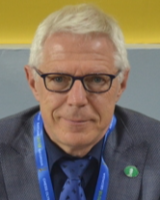
As I look ahead to my proposed mandate as CIS/Training responsible and international representation, I see a period of “phenomenal” challenges and opportunities. My goal is to use my experience within the ECU and FIDE to put the Belgian federation even more firmly on the map.
Here is the plan.
No one doubts the need for a well-trained, high-quality arbiter team at every level—from NA-C to IA. However, the real challenge lies in uniformity.
I have been working with the Commission of International Arbiters (CIS) for some time now to align the training across various leagues and cultural federations. It is a difficult exercise, but essential. Success will require very close cooperation within the board, specifically with Luc, Gaston, and Timothé.
The 2027 Challenge Starting late 2026, we face a giant task. The FIDE Rules Commission, where I serve as councillor, is currently rewriting the FIDE Laws of Chess. This means every single arbiter in our federation will need to be retrained or updated. As someone directly involved in drafting these new laws, I feel it is only logical that I take responsibility for leading this massive transition.
I have spent years building strong relationships with the leadership of both the ECU and FIDE. Currently, I serve as Secretary of the ECU Arbiters Council and councillor for the FIDE Rules Commission. I want to use these positions—more than ever before—to benefit our federation.
My “wet dream” is to organize an ECU or FIDE Championship in the near future.
I know my role within the BOIC (Belgian Olympic and Interfederal Committee) might seem ambiguous since chess is currently not recognized as a sport in Flanders. However, I am convinced that staying connected is vital.
The popularity of chess is growing, and that might eventually change the Minister’s mind. To be ready for that moment, we need the BOIC’s support. I have recently accepted an invitation to join their Officials Commission to maintain this essential link.
To realize this plan, I don’t need a massive budget. Training is largely self-funded through registration fees, and even a European tournament can be self-sustaining if managed correctly.
What I do need is time and collaboration. By relying on my extensive network and my experience as an International Arbiter and board member, I am ready to work with the team to build an objective evaluation system — similar to the one I helped develop for the ECU — to ensure our progress is measurable and professional.
Feedback or remarks are welcome at geert.bailleul@frbe-kbsb-ksb.be.

Jorian Burssens 08.09.2026 13
As (new) Rating Officer and General IT Manager, partially responsible for the federation’s database, rating systems, and digital infrastructure across…
Read more
Luc Cornet 12.05.2026
1. FIDE/ECU Delegate For FIDE, a federation’s delegate serves two specific meanings: FIDE also recognizes a National Rating Officer (from…
Read more Arben Dardha 06.05.2026 1
Officer for Titled Players and International Delegations Objectives This action plan is based on six concrete objectives: This approach aligns…
Read more